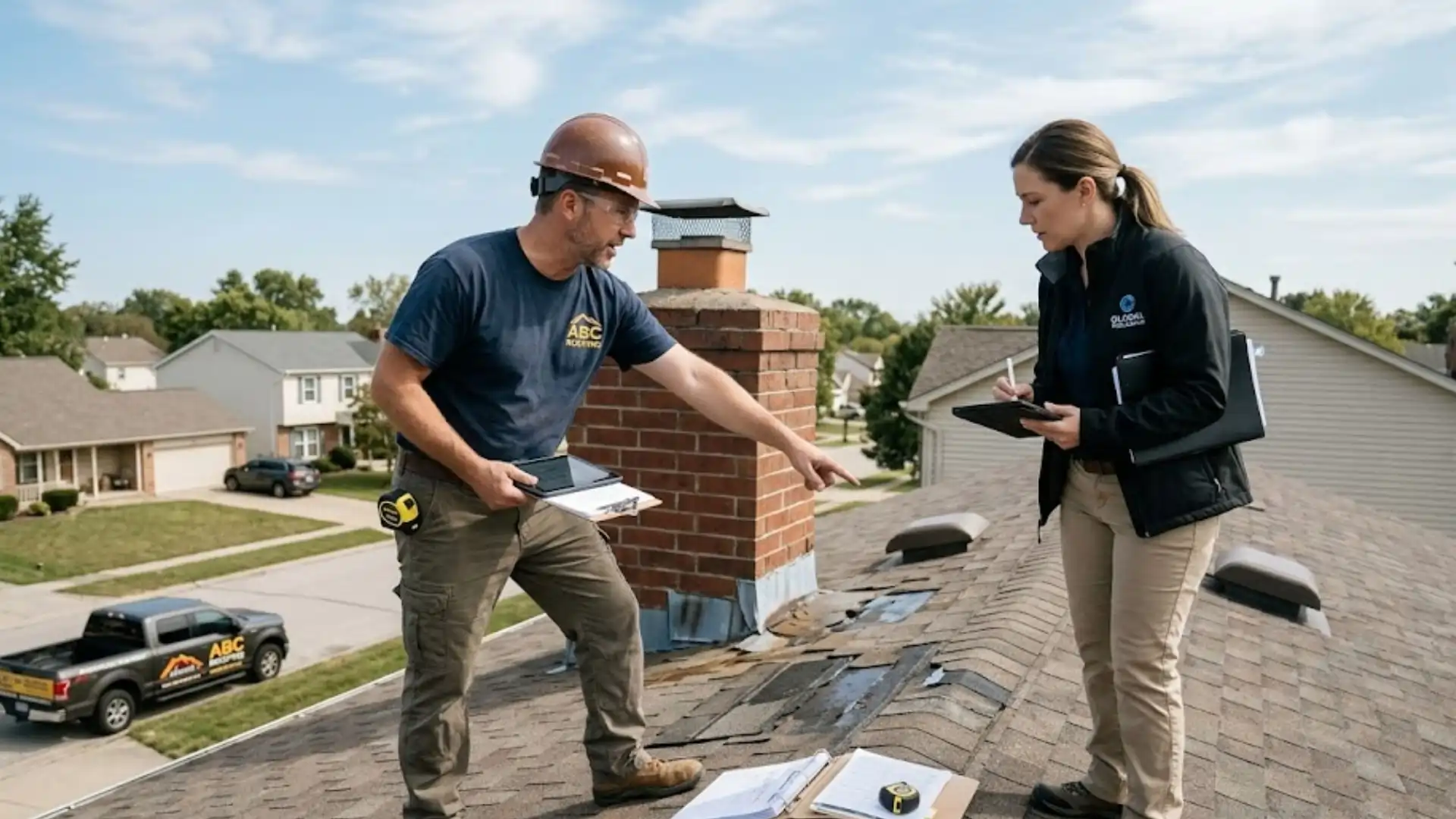
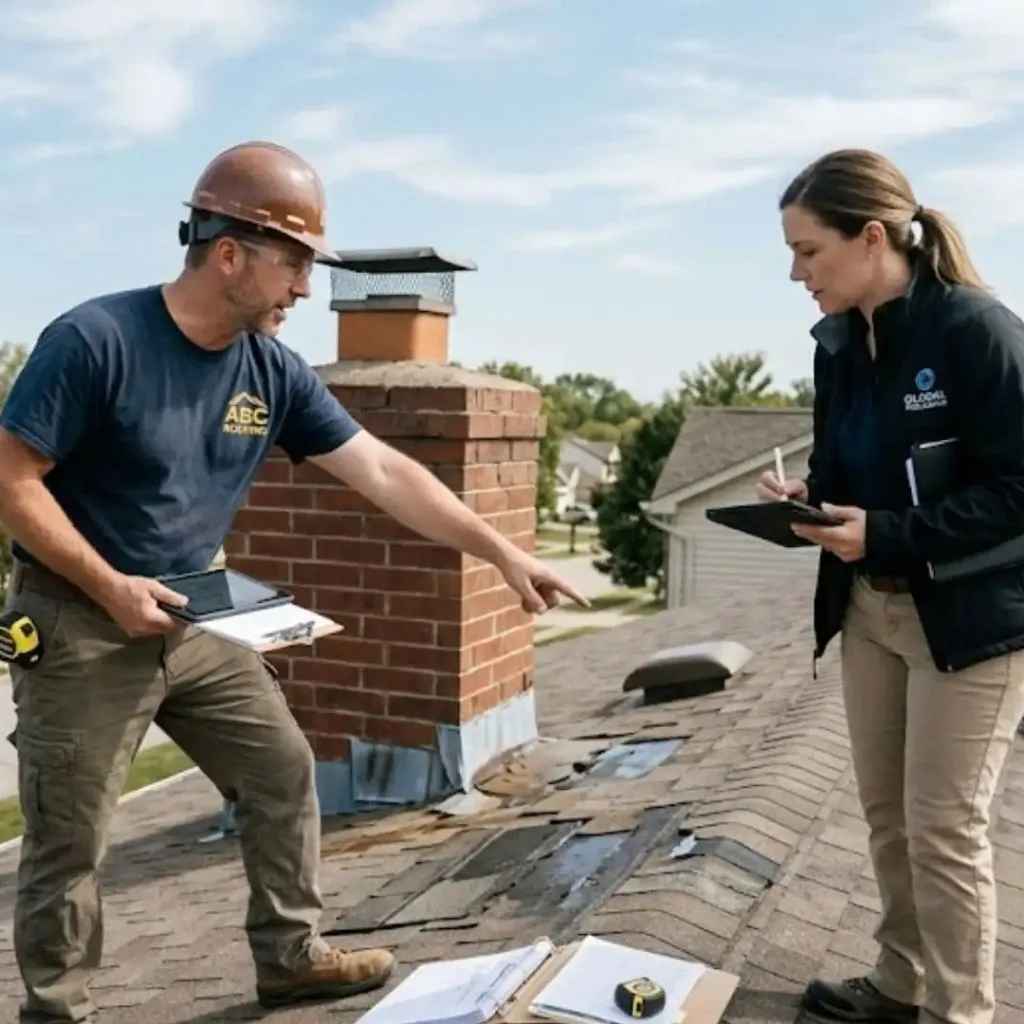
An insurance adjuster isn't a roofers enemy. Today, tomorrow, or at one point or another, you'll have to meet an insurance adjuster for the first time. Like 45% of the other Illinois roofers, you might not know what to do, what to say, or how to approach the meeting.
The key things you must understand are:
The insurance adjuster works for the insurance company (insurer). Their sole role is to check the claims and identify if the wear & tear matches the insurance claim. Normally, an IA will:
In 90% of cases, you won't even have to meet the insurance adjuster. It's the public adjusters job to meet with the insurance adjuster. In 10% of cases, the homeowner might ask you to meet with the insurance adjuster.
Yes, a roofer should meet with meet with the insurance adjuster on site for any roof claim. We recommend this because:
Some roofing companies in Illinois even have in-house public adjusters. They might facilitate the meeting for better elaboration of the damage. Why? Because no one can explain the damage or costs better than the actual contractor.
Plus, insurance adjusters often miss crucial details like:
Having a second expert (you) on the property, makes the claims process more authentic. However, you can't just wing the meeting. You have to be prepared for all of the questions and the points you must present.
Walking the roof is the most important part of the adjuster meeting. The roofer's job is to guide the adjuster. Best practices for the roof walk with the insurance adjuster:
Adjusters log statements and use them in the final report. So choose your words wisely and stick to factual observations about damage, while submitting evidence. Don't push too hard because the adjuster isn't your enemy.
Simultaneously, presents your facts instead of opinions. Want an idea? These are some things that you should and shouldn't say:
| What to Say | What to Avoid |
|---|---|
| Here's a clear hail strike on the south slope, around 1.25 inches in diameter. | This whole roof is obviously totaled. |
| You'll see the same damage pattern across all four slopes. | If you don't approve this, we're filing a complaint. |
| The damage matches the storm date per NOAA records. | Insurance companies always try to lowball us. |
| Here's our EagleView report with verified measurements for the scope. | Just trust me on the square footage. |
| I noticed three damaged vents and bent flashing on the chimney. | We always replace the whole roof when there's any damage. |
Speak in specifics, cite verified data, and keep the tone professional throughout the inspection. Some great things that you can do are:
Every roofer (including you) should leave the adjuster meeting with their own complete file of photographic evidence. Document everything from minor leaks to major holes because that will decide the viability of claim.
Some of the areas that you should document in a roof inspection are:
Use tools like Xactimate to keep clean copies of your documented results. The homeowner will use this documentation to file a claim. Naturally, the value of your work dictates whether the claim is approved or rejected.
Most adjusters do not approve claims on the spot. Field adjusters send photos and notes to a desk reviewer who issues the final decision within 7 to 14 days. Once the claim is approved, the insurance company sends an actual cash value check minus the deductible.
A typical timeline from inspection to roof replacement:
You as a roofing contractor aren't responsible for the whole process.
Yes, in most cases the roofer should be present. A roofing contractor who attends the inspection catches damage the adjuster might miss and answers technical questions on the spot. Most reputable roofing companies treat the adjuster meeting as a standard step in every storm claim.
The adjuster looks for storm damage caused by a specific covered event like hail or wind. They count visible strikes, measure granule loss, and check for shingle creasing. Most insurers require 8 or more verified hits per 100 square feet for a hail damage claim to be approved.
No, the field adjuster collects photos and notes but rarely makes the final call. Final approval or denial usually comes from a desk reviewer at the insurance company within 7 to 14 days of the inspection.
Most roof claims take 30 to 90 days from first inspection to final payment. The exact timeline depends on the insurer, the scope of damage, and whether the homeowner needs to dispute the initial assessment. Catastrophic storm events can extend the timeline by another 30 days.
Request a reinspection in writing. Submit additional drone photos, an EagleView Assess report, or a second opinion from another licensed roofing contractor. Most insurance companies allow a reinspection within 60 to 180 days of the original adjuster visit.
The insurance adjuster represents the insurance company and works to evaluate the insurer's liability. Their assessment may be accurate, and a second opinion from a licensed roofing contractor often catches missed damage or undercounted scope. Homeowners benefit from having both sets of eyes on the roof.
Sometimes, depending on the scope of damage and the policy. Most insurance companies approve a full roof replacement when 8 or more hail hits per 100 square feet are documented. A discontinued shingle that cannot be matched also helps the case for full replacement.
ACV (actual cash value) pays the depreciated value of the roof at the time of damage. RCV (replacement cost value) pays the full cost to replace the roof with materials of similar kind and quality. RCV policies almost always result in a higher payout for the homeowner.
A roofer who handles the insurance adjuster meeting well protects the homeowner, builds trust, and closes more roof claims. The meeting decides whether the claim gets approved, partially paid, or denied. However, the success of the meeting depends on the skill and ability of the roofing contractor.
Train yourself, document your processes, and understand the core answers to every tricky question. The best way to do that is to become the best in your trade and we can help you with that.
Our experts train you for every pre and post hurdle examination.




.jpg)