
How to Get Your First 10 Roofing Customers: Definitive Guide
Apr 28, 2026
The fastest path to your first 10 roofing customers is a stacked, sequenced playbook of free leads and paid roofing marketing strategies. Most new roofers just don't know how to land a job, and we're here to help you.
This guide walks through 10 proven roofing marketing strategies in the exact order a new roofing contractor should run them. Want a shorter version? Here's what you'll learn:
- The exact 10 step sequence to land your first 10 roofing customers in 90 days or less.
- Roofing companies face the highest customer acquisition costs in home services, with Google Ads averaging $187 per lead.
- Referrals close at over 50%, while shared third party leads close at only 10% to 20%.
- 63% of roofing business owners say lead generation is their #1 growth challenge (Roofing by the Numbers 2025).
- A complete Google Business Profile makes your roofing business 2.7x more likely to be trusted by potential customers.
- Reviews account for roughly 10% of local SEO ranking factors and can lift conversions 15% to 20%.
- Real cost per lead numbers for every major roofing lead source in 2026.
- How to track every lead in a roofing CRM so no qualified lead slips through.
What Counts as a Roofing Lead?
A roofing lead is a potential customer who has shown real interest in your roofing services. That can be a:
- Homeowner asking for a free roof inspection
- Property manager filling out a quote form
- Phone call from someone with storm damage.
You can categorize leads into some broad subsections, like:
- Inbound Lead: Anyone who contacts your roofing business first, usually through a website form or phone call.
- Outbound Lead: One member of your team contacts first through canvassing, cold calls, or direct mail.
- Qualified Lead: Someone who has a real need, budget, and roof in your service area.
- Unqualified Lead: Someone who is shopping for free advice or sits outside your geography.
Not every lead is a quality lead, so a roofing business needs a clear way to capture and qualify each one. The Small Business Administration explains that defining your ideal customer is the first step in any sales process.
For a new roofing contractor, that usually means homeowners in a defined service area with homes 15 years or older. These are the people who you want to target for quick conversions and roof inspections.
Step 1: Start With Your Personal Network
The first 10 roofing customers almost always come from people who already trust you. A roofer who spent 5 years on a crew before going solo can call every former coworker, neighbor, and family member with a roof. This source for leads costs nothing and converts faster than any paid roofing marketing strategy.
Build a list of 50 to 100 people in week one. Send a short personal message to each contact, lead with a free roof inspection, and skip the sales pitch. The Better Business Bureau notes that personal recommendations remain the #1 reason consumers choose a contractor.
- Text or call 10 contacts a day for one week to start conversations with potential customers.
- Offer a free 25 point roof inspection with a written report. Most homeowners say yes when there is no cost.
- Document every inspection with before photos, drone shots, and a clear estimate for any work needed.
- Ask each happy customer for two referrals at the end of the job. Two referrals from 5 jobs equals 10 new leads.
- Send a handwritten thank you note after every sale. This small step lifts repeat business and referral rates.
Step 2: Set Up a Simple Roofing CRM to Track Every Lead
Roofing by the Numbers 2025 found that only 28% of roofers use a roofing CRM, and the rest leave money on the table. A CRM is just a structured way to log every potential customer, every conversation, and every follow up.
A new roofing business does not need expensive software in week one. A free spreadsheet works fine for the first 50 leads. Once volume grows, a real roofing CRM saves hours every week and can lift close rates by 20% or more.
You can try CRMs like ServiceTitan (Expensive) or PillarDrive (Affordable). Irrespective of the choice you make:
- Log every lead within 5 minutes of contact: name, phone, address, source, and stage.
- Set automatic follow up reminders at day 1, day 3, day 7, and day 30 for every estimate that has not closed.
- Tag every lead with its source so you know which roofing marketing strategies actually pay off.
- Send every past customer a check in email twice a year for repeat business and referrals.
- Review your lead pipeline once a week. Most missed sales come from leads that go cold for lack of follow up.
Step 3: Create and Optimize Your Google Business Profile
A Google Business Profile is the single most important free leads channel for any new roofing company. Most homeowners searching for roofing services start on Google, and the local map pack shows three businesses above every other result.
Top 3 map pack rankings produce 126% more traffic than positions 4 through 10. So get that business profile set up. Here's your quick guide:
- Pick "Roofing Contractor" as your primary category. Add up to four secondary categories like "Roofing Supply Store" or "Gutter Cleaning Service" if they fit.
- Use the same business name, address, and phone number across every directory online. Google calls this NAP consistency.
- Upload at least 10 high quality job photos in the first week. Profiles with 10 or more photos see significantly higher engagement.
- Write a detailed business description that names your service area cities and core roofing services.
- Post at least one update per week to signal an active, working business to the search engine.
- Enable messaging so potential leads can text you directly from search results.
Setting up the profile takes about 30 minutes but verification can take a few days. Google's official guide on how to improve your local ranking on Google covers the foundations every roofing contractor needs to follow.
Step 4: Build a Simple Roofing Website Optimized for Local SEO
A roofing website does not need to be fancy to capture leads. It needs a:
- Phone number at the top
- Clear list of services
- City specific pages for every town in your service area.
- Specific structure for roofing SEO that targets terms like "roof repair [city name]" pulls in qualified leads that convert at high rates.
Google's SEO Starter Guide covers the technical basics for any roofing contractor. The work is straightforward but takes 3 to 6 months to show results, so launch the site as early in your timeline as possible.
Want some extra tips?
- Buy a clean domain that includes your city or region when possible. RoofersofTexas or ChicagoRoofing.
- Create one page per service: roof replacement, roof repair, gutter installation, storm damage, and metal roofing.
- Add real customer testimonial quotes and Google review counts on every service page.
- Make the phone number a clickable link that dials on mobile. Most roofing leads come from phones.
- Install Google Analytics 4 and Google Search Console on day one to capture lead source data from the start.
Those are the basics and there is a lot more to it. But this should be enough to get you some unfiltered leads.
Step 5: Start Door Knocking and Neighborhood Canvassing
Door knocking remains one of the most reliable ways to generate roofing leads when you have zero budget for ads. A roofer who knocks 100 doors in a target neighborhood will book 3 to 5 free roof inspections on a normal day.
Storm damaged areas convert at much higher rates. NOAA storm reports tell you exactly which zip codes saw recent hail or wind events. Roofers who arrive within 48 hours of a verified storm find homeowners ready to talk.
You can boost your conversion ratio by:
- Wearing a clean uniform with a company logo and carry a tablet, business cards, and a sample shingle.
- Leading with the free inspection offer because most homeowners refuse a sale and accept a free service.
- Dropping a door hanger if no one answers. Door hangers convert at roughly 1% to 2% on cold streets.
- Planting a yard sign at every job site. Neighbors who see active work in the area call within days.
- Tracking every door, every conversation, and every appointment in your roofing CRM from Step 2.
Door knocking and canvassing is one of the best ways of getting residential roofing jobs. It takes effort and presentation, but doesn't cost a penny, making it perfect for new contractors with limited budgets.
Step 6: Collect Online Reviews Fast on Every Job
The U.S. Bureau of Labor Statistics consumer data confirms that online reviews now influence the majority of home services purchases. Most homeowners read reviews before they call any roofing contractor, and the best reviews show up directly in Google search results.
Aim for 10 Google reviews in your first 90 days. Businesses with 10 or more reviews see a 15% to 20% boost in search traffic. The competitive sweet spot for most local roofing markets sits between 4.5 and 4.8 stars.
You have to set up a review collecting system. This means:
- Sending a direct review link by text within 1 hour of job completion.
- Asking for the review in person while the customer is still happy.
- Replying to every review, positive or negative, within 48 hours.
- Spread reviews across Google, Facebook, and other platforms like BBB.
- Include a photo of the finished roof in your reply when the platform allows it.
Some CRMs like PillarDrive allow direct review collection. These are perfect for setting review dumps on all your platforms.
Step 7: Build a Simple Referral Program From Your First Customer
Referrals close at over 50%, which is more than double the rate of any third party lead source. Baking a referral program into the first job will build a free leads engine that compounds over time.
The program does not need to be complicated. A $100 gift card per signed referral is enough for most homeowners. Some roofing companies offer a tiered reward where every fifth referral pays out a larger bonus.
You need to:
- Print a one page referral card with your phone number, website, and reward amount.
- Hand the card to every customer at job completion and explain how it works in 30 seconds.
- Send a follow up text 2 weeks after the job with a direct link to your referral page.
- Track every referral by the customer who sent it so the reward gets paid the same day the new job signs.
- Public thank you posts on Facebook for every referral keep the program visible to other past customers.
Even small referral payouts will drastically improve your chances of landing new jobs. We highly recommend a referral program and its one of the go to options for landing commercial roofing jobs.
Step 8: Join Local Facebook Groups and Community Pages
Almost every city has groups like "[City Name] Homeowners," "[City] Buy Sell Trade," or neighborhood specific HOA pages. These groups have posts asking for roofing recommendations every single week.
The rule for most groups is no direct advertising. The way around this is to build a real reputation by answering roofing questions when they come up. Help a few people for free in a group and you'll get tagged when someone asks for a recommendation.
- Join 10 to 15 local Facebook groups in your service area and read the posting rules for each one.
- Set up alerts for words like "roofer," "roof leak," and "roof replacement" so you see every post fast.
- Answer roofing questions with helpful tips and no pitch. Group admins ban sales posts but welcome real expertise.
- Post before and after photos of recent jobs in your business page, then share the link inside groups that allow it.
- Use Nextdoor in the same way. Nextdoor users skew toward homeowners who own and maintain their property.
Step 9: Build Local Business Partnerships With Parallel Niches
Local business partnerships put your roofing services in front of homeowners at the exact moment they need a roofer. For example:
- A real estate agent closing a home sale needs a roof inspection.
- An insurance agent reviewing a claim needs a trusted contractor.
- A property manager with a leaking commercial roof needs a fast quote.
Each partnership is a long term lead generation strategy. One realtor with 30 closings a year can send 5 to 10 new client leads to a single roofing company. Two or three steady partners are enough to keep a small crew busy.
You can start by:
- Building a list of 20 realtors, 10 insurance agents, and 5 property management companies in your service area.
- Visiting each office in person with business cards, a one page service flyer, and a small gift like coffee.
- Offering a fast turnaround on roof inspection reports. Realtors love a 24 hour written report during contract review.
- Sending referral fees where the law allows or return the favor by referring your past customers to them.
- Staying top of mind with a monthly email update on roofing tips, recent jobs, and seasonal reminders.
Step 10: Launch Google Local Services Ads for Pay Per Lead Campaigns
Google Local Services Ads, often called LSAs, sit at the very top of Google search results with a Google Guaranteed badge. These differ from PPC, which are generally more expensive.
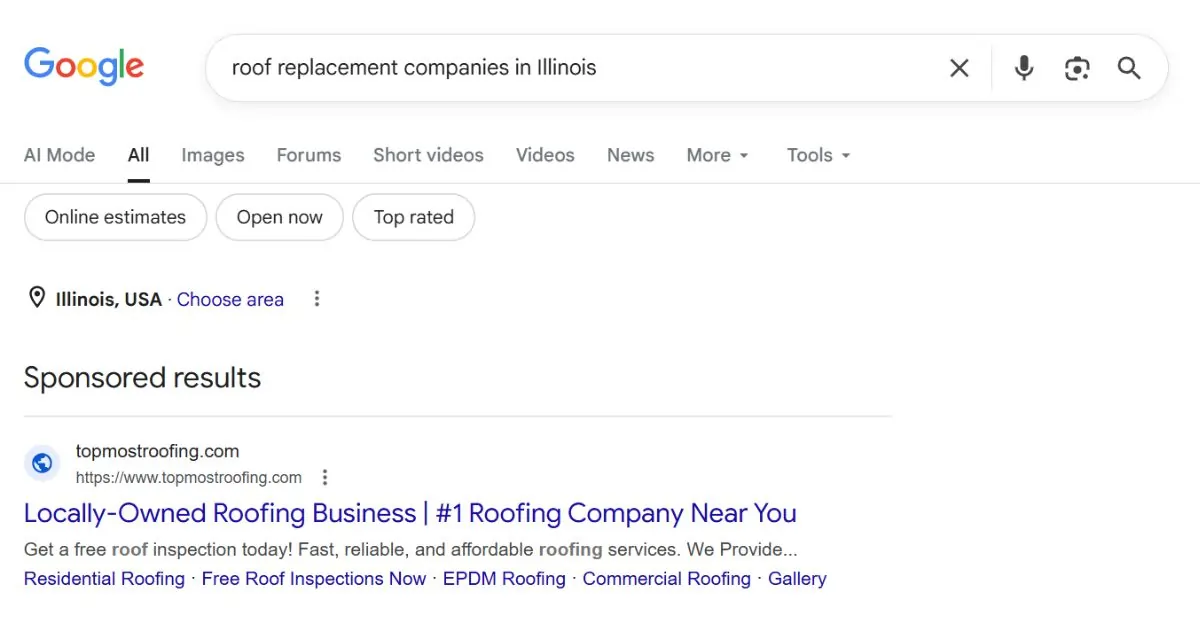
The pay per lead format only charges when someone calls or messages your roofing company. The cost per lead is usually lower than standard Google Ads because the program filters out clicks that do not turn into real conversations.
The catch is the verification process. You have to:
- Verify your roofing license, general liability insurance, and workers comp insurance before applying.
- Pass the background check on every owner and field employee. The check takes 1 to 2 weeks.
- Set a weekly budget you can afford to lose for the first month while the system learns your business.
Google's Local Services Ads page walks through the requirements step by step. After you've finished setting up LSAs, focus on Speed to Lead (STL). Answer every call within 30 seconds or set up an automation to keep leads engaged.
What Roofing Lead Sources Actually Cost
Cost per lead varies wildly across roofing marketing strategies. The table below shows typical 2025 to 2026 cost per lead figures for the most common roofing lead sources.
| Lead Source | Typical Cost Per Lead | Typical Close Rate |
|---|---|---|
| Referral from past customer | $0 to $100 | 50% or more |
| Google Business Profile (organic) | $0 | 30% to 40% |
| Door knocking and canvassing | Labor cost only | 20% to 30% |
| Google Local Services Ads | $60 to $120 | 25% to 35% |
| Google Ads (PPC) | $150 to $250 | 15% to 25% |
| Facebook and Instagram ads | $30 to $80 | 10% to 20% |
| Shared third party leads (Angi, etc.) | $30 to $100 | 10% to 20% |
A single channel can dry up overnight when an algorithm changes or a referral partner moves away. The smartest roofing business owners blend at least 4 lead sources.
- Free leads from referrals and Google Business Profile should always be the foundation.
- Paid channels like Local Services Ads fill gaps and produce immediate leads.
- Track cost per lead and close rate by source every month. Cut what does not work.
- Reinvest 5% to 10% of revenue into marketing strategies that produce qualified leads.
FAQs About Getting Your First Roofing Customers
How fast can a new roofing company get its first 10 customers?
Most new roofing companies that follow this step by step guide land their first 10 roofing customers in 60 to 90 days. The fastest path is a personal network outreach in week 1, paired with a verified Google Business Profile and 10 doors knocked per day. Storm damaged service areas can compress that timeline to 30 days.
What is the best source of free roofing leads for a new business?
The best source of free roofing leads is referrals from past customers and a complete Google Business Profile. Referrals close at over 50%, and a verified Google Business Profile makes a roofing business 2.7x more likely to be trusted by potential customers. Both channels cost nothing but time and consistent effort.
How much does a roofing lead cost in 2026?
A roofing lead costs anywhere from $0 for a referral to $250 for a Google Ads click. Google Local Services Ads typically run $60 to $120 per lead. Shared third party leads from services like Angi or Thumbtack run $30 to $100 but close at far lower rates than exclusive leads.
Does a new roofing contractor need a website to get leads?
A roofing website is not required for the first few jobs but becomes critical once a roofing business wants steady inbound leads. Most homeowners check the website before they call any roofing contractor. A simple 5 page site with city specific pages and a clickable phone number is enough to start.
Should a new roofing business buy leads from third party sites?
Buying shared roofing leads from third party sites can fill gaps but should never be the only lead source. Shared leads close at 10% to 20% because the same homeowner is sold to multiple roofing companies at the same time. Use third party leads for short term cash flow while building free channels like reviews and referrals.
When is the best time of year to start roofing marketing?
The best time to start roofing marketing is right before the storm season in your region. Spring works for most of the country, while late summer fits the southern hurricane belt. Roofing leads spike in the 30 days after any major hail or wind event, so a verified Google Business Profile and active LSA account both need to be live before the storm hits.
Do you need a roofing license and insurance to generate leads?
Most lead generation channels require a valid roofing license and active liability and workers comp insurance. Google Local Services Ads, BBB accreditation, and most realtor partnerships will not work without proof of both. Check your state contractor licensing board before spending any money on roofing marketing strategies.
Bottom Line On Getting Your First 10 Roofing Customers
Getting your first 10 roofing customers comes down to a simple outreach, efforts, and marketing. Build a personal network, create a Google Business Profile, collect real online reviews, door knock, and establish local partnerships.
Pick the first 3 steps that fit your time and budget, run them every day for 30 days, and measure the results. Need some help? We explain the blueprints in our classes and advanced sales training course.
Don't know how to start?
We'll help you with all of the pre and post-licensing processes.