
Residential vs Commercial Roofing: Scopes, Profits, & More in 2025
Oct 31, 2025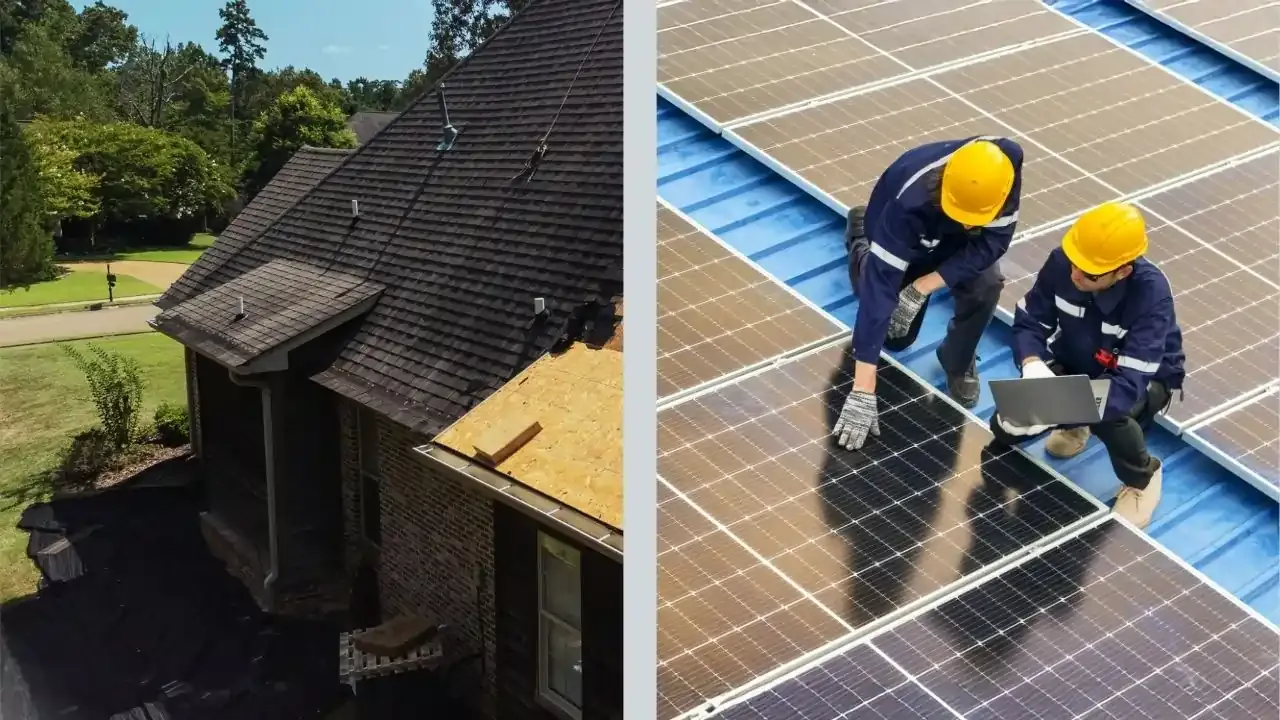
Every roofer faces a choice between residential roofing and commercial roofing at some point. Both fields bring unique benefits, challenges, and opportunities. It leaves new roofers at odds with the choice, finding it difficult to choose one or the other.
This guide explores requirements, profitability, job scope, and demand, helping you make an informed decision in 2025. We've listed and analysed every aspect to help you find your ideal career path.
Overview of Residential vs Commercial Roofing
Here's a quick overview of the differences between residential and commercial roofing:
| Aspect | Residential Roofing | Commercial Roofing |
|---|---|---|
| Required Licenses | Limited license under the Illinois Roofing Industry Licensing Act. | Unlimited or Commercial license required for larger projects. |
| Insurance Costs | Lower requires standard liability and workers’ compensation. | Higher requires larger policies, bonding, and coverage limits. |
| Profit Margins | Net margins average 10 to 20%. | Net margins average 8 to 15%, depending on management. |
| Average Payouts | $6,000 to $20,000 per home roof replacement. | $50,000+ for larger commercial or industrial projects. |
| Payout Cycles | Short, fast turnarounds. | Longer progress-based payments. |
| Risk Level | Moderate, mainly weather and homeowner disputes. | Higher because of contractual liability and safety risks. |
| Investment Requirement | Lower requires basic trucks and tools. | Higher requires equipment, lifts, and safety systems. |
Quick Answer: Residential roofing is quicker with better profit margins, but seasonal and lower payouts. Commercial roofing is riskier, longer, and has lower profit margins, but better payouts and long-term feasibility.
Requirements of Residential vs Commercial Roofing
All roofers must hold a roofing license according to the Illinois Roofing Industry Licensing Act. Roofers can choose between a Limited or Unlimited Roofing License, depending on their needs. Here's a quick overview of the licenses:
- Limited License (Residential): These allow you to work on residential properties that contain 8 or fewer units.
- Unlimited License (Commercial/Industrial): Allows you to work on commercial, industrial, and residential projects irrespective of size.
A residential roofer with a Limited License cannot work on a commercial project. Both licenses have separate exams, requirements, and job scopes. Other requirement differences include:
- Surety Bonds: Residential roofing requires a surety bond of $10000, while commercial roofing and licenses require a $25000 surety bond.
- Insurance Costs: Commercial roofing has 20% to 80% higher insurance costs than residential roofing.
- Material Costs: Commercial roofing projects require more specialized materials, making them more investment-intensive.
Residential work typically requires smaller insurance limits. Commercial contractors must carry higher limits and often need bonds for public or industrial projects.
Profitability of Commercial vs Residential Roofing
Residential roofing brings faster cash flow and simpler management. Commercial roofing offers better payouts but drawn-out cash flows. Here's the profitability compared:
Residential Roofing Profitability
Illinois roofers make $27.59 per hour on average, while contractor billing rates reach about $85 per hour (including overhead). Most roofing companies see gross margins of 20 to 40% and net profits of 10 to 20% per residential project.
Residential roofing projects offer three distinct advantages:
- Shorter Projects: Residential projects usually range from 1 to 10 days, making them quick cash grabs.
- More Profit Margins: These projects have better margins, meaning you earn per time and money invested.
- Low Investments: Residential projects are easier to come by and require lower investments.
The quicker payouts make residential projects great avenues for new businesses. It gives you liquid cash to expand the business more quickly.
Commercial Roofing Profitability
Commercial roofing involves larger contracts but also higher risk and slower payments. Typical installation costs for membranes like TPO or EPDM range from $4 to $9 per square foot. Commercial roofing net margins often range between 8% and 15% depending on management and bid accuracy.
In a 2025 survey, 68% of commercial contractors reported higher sales volume, and 80% expect further growth. While commercial roofing has bigger but delayed payouts. These projects also require higher material and insurance investments.
We recommend focusing on commercial roofing projects when you have:
- Established business reputation
- Great capital for expansion
- Enough skilled workers
Individuals cannot cope with the taxing demands of commercial roofing.
Job Scope of Residential and Commercial Roofing
Residential and commercial roofing jobs have similar scopes. The main difference is the type of material and scale of each job. Residential roofing projects are limited to a single house, while commercial buildings are much larger with greater requirements.
Here's how each compares to the other:
Residential Job Scope
Residential work covers steep-slope systems, primarily asphalt shingles, tiles, and wood. These dominate more than 55% of the roofing materials market. Tasks include tear-offs, shingle installation, flashing, and gutter repair.
Residential roofing requires a more varied experience with different roofing systems. The requirements can shift drastically from one job to another.
Commercial Job Scope
The materials used in commercial projects include TPO, EPDM, PVC, Modified Bitumen, or metal. Flat and low-slope systems accounted for 56.8% of industry revenue in 2024. About 94% of commercial roofing activity is re-roofing rather than new builds.
Property owners often have similar requirements across different commercial projects. This happens because of building codes and standards.
Demand for Commercial vs Residential Roofing
Residential roofing held nearly 60% of the total U.S. roofing market share in 2024. Storm recovery, aging homes, and energy-efficient roof replacements fuel steady growth. Around 77% of residential contractors expect sales growth through 2027.
The commercial roofing market continues to expand, with forecasts showing a 7.35% CAGR through 2030. Around 83% of commercial roofers expect growth in the next three years, driven by re-roofing cycles, energy regulations, and facility upgrades.
When compared side-by-side, residential roofing has more demand with seasonal spikes. Roofers can expect a huge spike in demand after storms or volatile weather. Commercial roofing is more monotone but follows the same seasonal spike.
Illinois Roofer Outlook
Illinois employs roughly 6,000 to 6,100 roofers statewide. Both residential and commercial markets remain active, especially around Chicago and urban centers with older building inventories.
Most roofers work on both types of professional roofing projects. While the number of specific license holders isn't public, we believe 65% of roofers hold an unlimited license.
FAQs on Commercial and Residential Roofing
What is the most common roof type in Illinois?
Asphalt shingles are the most common. They are durable, cost-effective, and handle Midwest weather well. Asphalt shingles hold over 55% of the U.S. roofing material market share.
What are the rules for roofing in Illinois?
Roofers must hold a valid state license under the Illinois Roofing Industry Licensing Act, maintain insurance, and follow local building codes. Roofers might also require roofing permits for projects, depending on the scope and type of work.
Does Illinois require roofers to be licensed?
Yes, roofing contractors need to be licensed, insured, and tested under the state act. Performing roof work without a license is a punishable offense in Illinois. You incur hefty penalties of up to $15000 and a felony record.
How hard is the Illinois roofing exam?
The Illinois roofing exam is challenging and covers roofing materials, safety codes, and estimating. Preparation with official materials and practice exams improves your passing odds. About 60% of applicants fail the exam on their first attempt.
What is the difference between commercial and industrial roofing?
Commercial roofing applies to offices, retail, and warehouse buildings. Industrial roofing applies to manufacturing or heavy-duty environments with strict performance requirements.
Bottom Line on Residential vs Commercial Roofing
In 2025, the Illinois roofing market is growing in both residential and commercial segments. Residential roofing offers quick cash flow and steady volume, while commercial roofing provides high-value contracts and scalability.
You should choose between one and the other based on your business and flexibility. We recommend residential roofing for new businesses and contractors. Commercial roofing is only feasible for established companies with good capital.
If you're new to the industry and don't have a license, join our Illinois roofing classes. We prepare you for the exam and all the post-licensing hurdles. Get your license and the skills to succeed in the roofing industry with us.