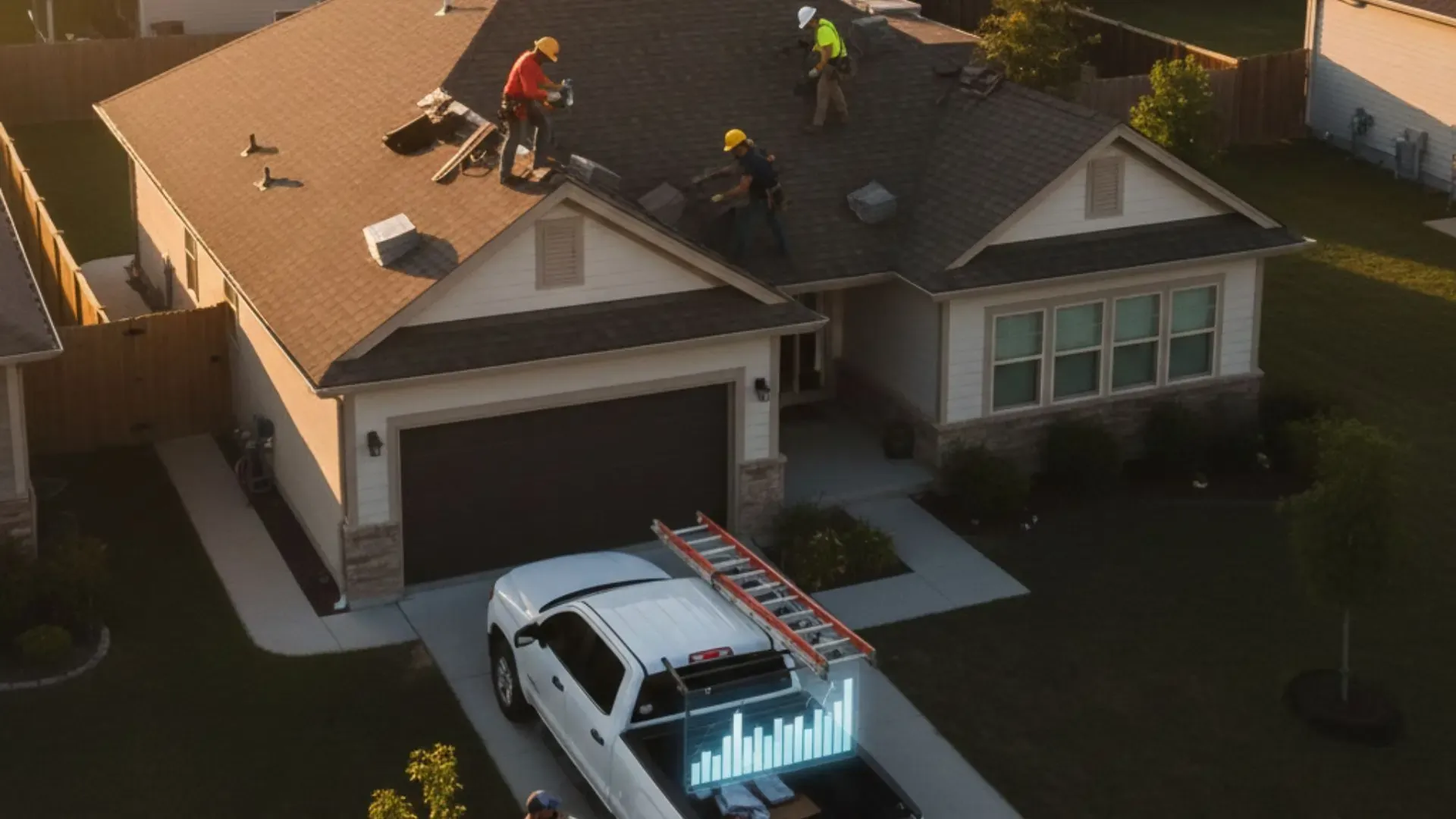
Roofing company owners make $70,000 to $5 million per year. Most owners take home somewhere between $70,000 and $250,000, according to owner pay data from Roofr and ProLine Roofing CRM. But what most people won't tell you is that there are a lot of hidden details attached to that figure.
We're here to uncover the secrets. You'll learn the exact figures, ideal scenarios, ways to maximize business revenue, and more. You will finish with a clear, honest picture of the money behind the trade.
The U.S. roofing industry generates roughly $76 billion to $100 billion in annual contractor revenue. This Old House pegged the market near $76.4 billion in 2025, while IBISWorld data reported by The Deal Sheet put contractor revenue at about $100 billion for 2025.
Either way, roofing is one of the largest trades in home services. Here are some quick facts about the industry:
Roughly 80% of demand comes from replacement because roofs like every other thing have an expiry date. The median American home is now around 40 years old, so roofs age into failure regardless of the economy.
The demand is real, but the market softened in places during 2025. In 2026, the U.S. roofing market slump has intensified because of deep-rooted global problems. But that's another topic and we have to focus on revenue.
Roofing company owners make $70,000 to $250,000 in a typical year. Owner pay data compiled by Roofr and ProLine Roofing CRM shows solo owners on the low end ($70000) and multi location owners clearing $300,000 to more than $1 million.
The roofing business owner salary depends on revenue, net margin, and how much the owner still works in the field. A hands-on owner operator earns less because the business cannot run without them.
| Business Stage | Estimated Annual Revenue | Estimated Owner Take Home (Salary + Profit) |
|---|---|---|
| New roofing business (owner operator) | $150k to $500k | $60k to $120k |
| Growing 3 truck shop | $1.5M to $3M | $150k to $300k |
| Established residential business | $1M to $3M | $150k to $400k |
| Large commercial enterprise | $5M to $25M+ | $300k to $1M+ |
Use the explorer below to see how revenue, margin, owner take home, and sale value shift as a roofing company grows.
Gross profit is what remains after the direct cost of a job is subtracted from revenue. In simpler words:
Gross Profit = Revenue - Total Cost* (Materials+Labor)
Net profit is what survives after subtracting overhead like insurance, trucks, marketing, office staff, and your own salary. The formula is:
Net Profit = Gross Profit - Overhead (Marketing, Insurance, Fuel costs)
Owners who confuse the two underprice jobs and burn out. The NRCA reports that an average roofing contractor nets just 2.8%, which means half of all roofing companies make less than that.
Well run shops beat it by a wide margin. To put things into perspective:
For a deeper look at the commercial side, see our breakdown of commercial roofing net profit margins. Now plug your own numbers into the calculator below.
A roofing company makes $2,000 to $8,000 in gross profit per house on a typical residential replacement. A 2,000 square foot shingle job usually bills $8,000 to $15,000. Materials and labor cost $4,000 to $9,000, per 2026 startup and pricing data.
Your real take home pay is smaller than that gross number because of marketing, insurance, and office costs. At an 8% net margin, a $12,000 roof leaves closer to $960 in true net profit for the owner.
This is why volume and pricing discipline matter. Most business owners (especially new ones) have difficulty with volume, i.e., finding residential roofing jobs.
The cost structure of every roofing job is different, because no two roofs are the same. However, you can standardize the cost by breaking down the figures into different cost-buckets (or units). For example:
Most residential jobs are priced by the square, meaning 100 square feet of roof area. The cost of roofing per square can be anywhere between $300 to $800 depending on the material, scale, or effort required.
You must calculate your costs, overhead, and the potential profit margins to price the job. Workers compensation for roofers costs 3 to 6 times more than it does for carpenters or painters.
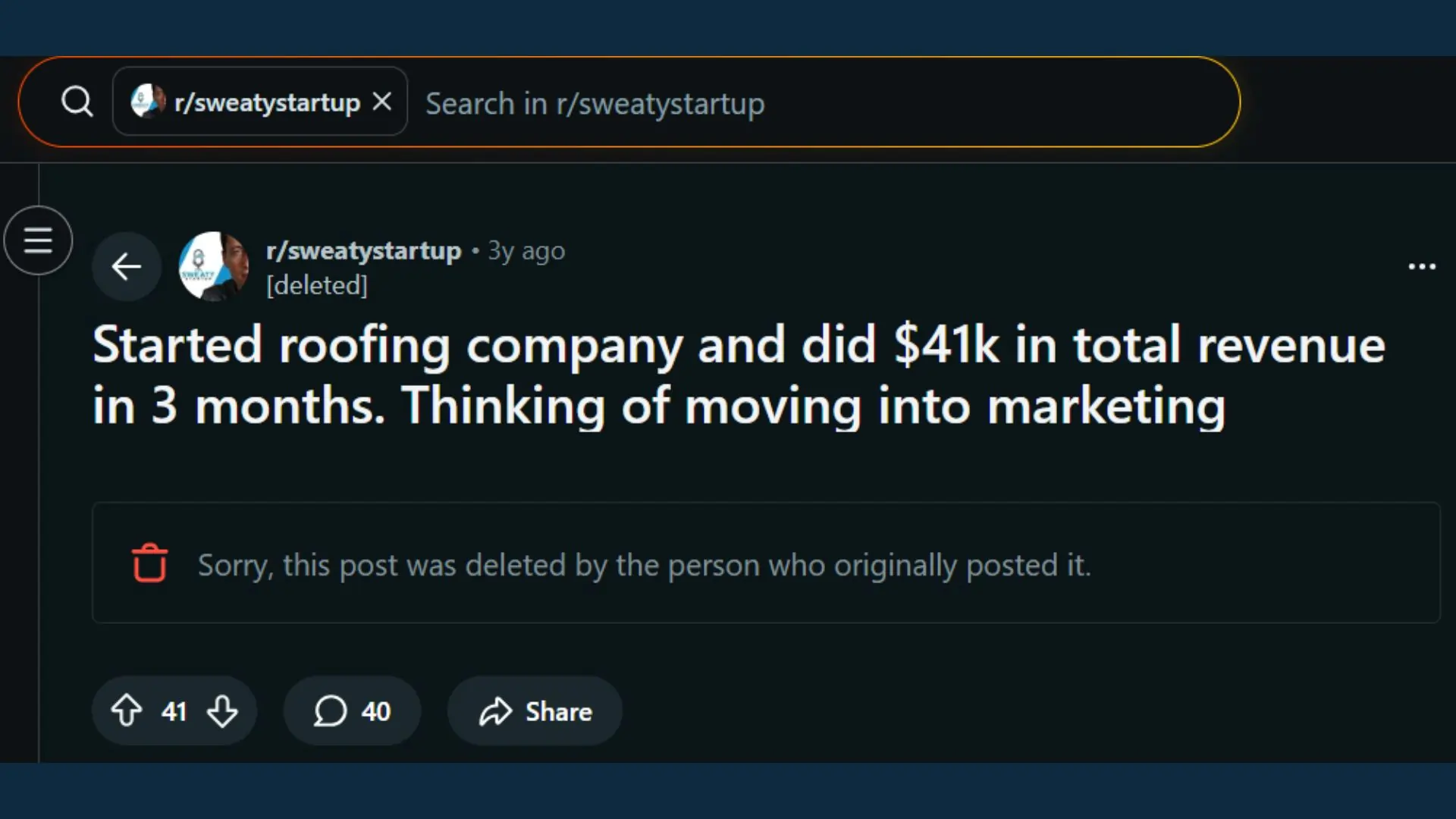
Real data from roofing owners tells a more honest story. The dream gets sold as easy money, but the reality is a mix of high risk and real reward. Forum threads on Reddit and Roofing Talk are full of owners sharing exact numbers.
"Roofing is very lucrative... doctors, lawyers, roofers. If you know, you know. But it's 100% about the systems. If your crm isn't tight and your crews aren't reliable, you're just buying yourself a stressful 80-hour-a-week job." User on r/Roofing
Some owners report strong results, and others share sobering numbers. A few examples pulled from public forums and case studies:
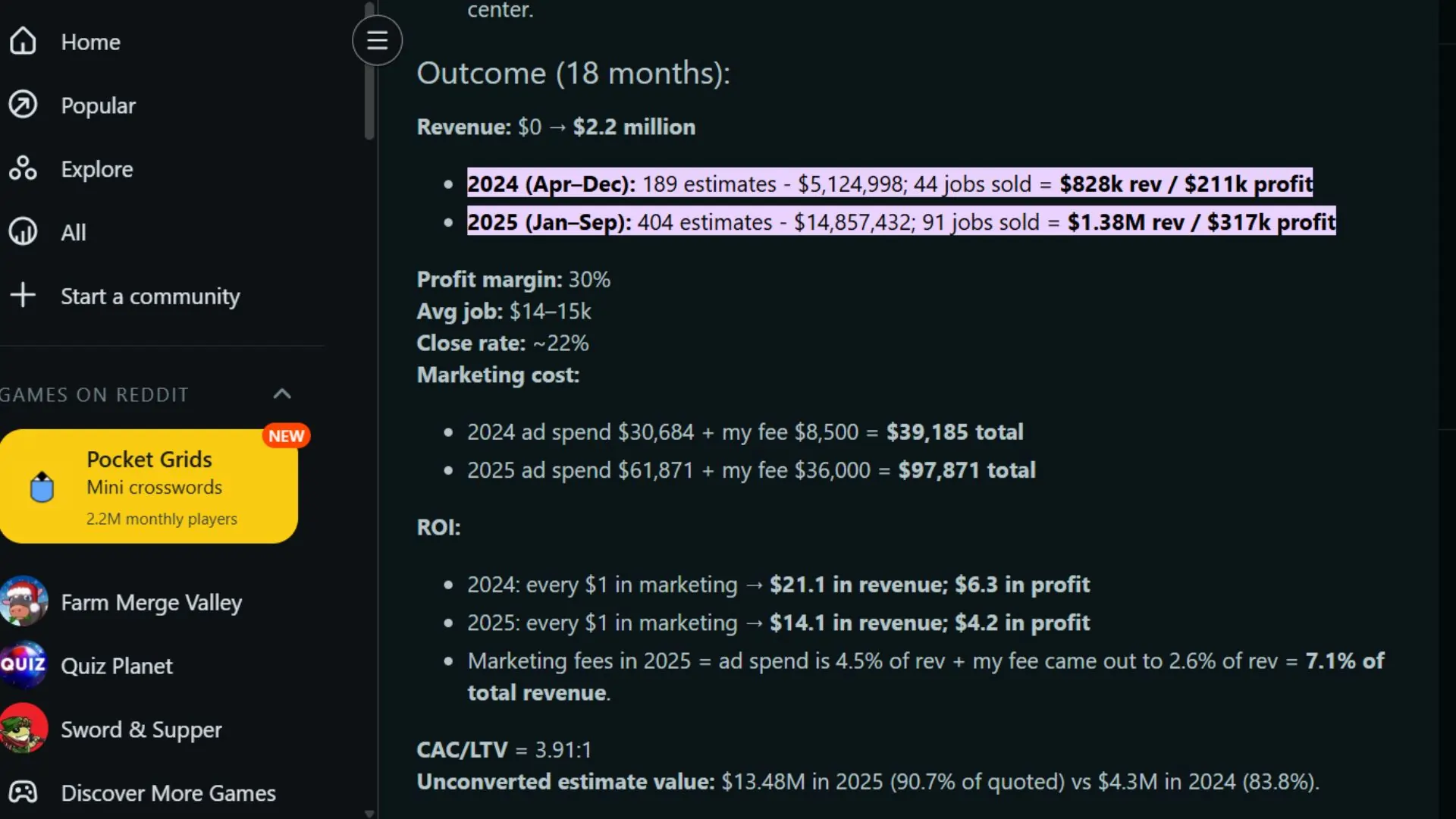

A Roofing Talk breakdown of a Central California shop showed $2M in revenue with a $200k owner salary plus 3% to 5% net on top. According to the average figures, their take home amount was near $260k to $300k.
A separate two crew shop at the same revenue reported only $100k to $125k after heavy reinvestment. Same revenue, very different pay.
Most owners fail to their own numbers, cash flow, and pricing. The same mistakes show up again and again in forums. Some of these mistakes are:
Roughly 20% of roofing businesses fail because of poor cash flow, and the average roofing company only stays open three to four years. A dollar lost here and there quietly builds into thousands.
Many of these traps trace back to weak cash management. That is exactly where working capital comes in.
Working capital is the cash a roofing business needs to cover daily costs while it waits to get paid. Roofing is seasonal and payment heavy, so even profitable owners can run out of cash. This is one of the top reasons roofing companies stall or fail.
Owners buy shingles, underlayment, and flashing weeks before an insurer or mortgage company releases payment. Payroll, fuel, and insurance do not wait. That gap is the working capital problem in one sentence.
Smart owners build a reserve of two to three months of operating expenses while setting up a business line of credit of $25,000 to $100,000. Many also use net 30 supplier terms and manufacturer credit from GAF, Owens Corning, or CertainTeed to bridge the gap. For financing options, a roofing cash flow guide is a useful starting point.
Starting a roofing company in 2026 usually costs $10,000 to $80,000. A multi crew operation startup can pass $180,000. According to 2026 startup cost data a solo owner operator with basic tools can launch for as little as $15,000 to $35,000.
The biggest early costs are the vehicle, insurance, and licensing. We've listed some of these costs to help you understand the scale.
You also need the right license before you take a single job. In Illinois that means passing the state exam and understanding roofing startup costs.
A roofing company is usually worth a multiple of its earnings. The biggest paydays in roofing come from building a strong business then selling it into a hot market.
Right now that market is unusually active because of global dynamics. Private equity backed roofing platforms grew from 17 in early 2023 to 56 by late 2024. Buyers closed 134 acquisitions in 2024 alone, per roofing M&A tracking data.
Business owners today field calls from a dozen funded buyers. And surprisingly, a lot of these business owners sell their company. Here is a sneak peek into worth ranges for different companies:
Named players (giants with credibility) have higher ranges. CentiMark grew organically to about $1.7 billion in 2026 sales as a family owned commercial operator. Two other giants Tecta America and Roofing Corp of America consolidated through acquisition.
Big money moved too, with:
For owners weighing an exit, multiple expansion data shows recurring revenue and clean books matter so much. The buyer wants to know if the business is sustainable and profitable? If your business is both then you can exit with a hefty paycheck.
You must streamline operations and protect margins on every job to earn like top roofers. Growth without margin discipline just builds a bigger, more stressful version of the same problem.
The highest leverage moves come down to systems, speed, and pricing.
Sales skill compounds all of this. If knocking doors is part of your model, our door knocking guide can definitely help you. Need some extra help? Join our Advanced Sales Training Program.
Yes, owning a roofing company is profitable when you manage it properly. Many owners reach a six figure income within a few years. Plus roofing is one of the more stable professions in the service industry.
Now on the actual profit figures, the average shop nets 2.8%. Only owners who master their numbers reach the 8% to 15% range. These figures are driven by the inherent values of the roofing industry. This includes:
Still deciding whether the trade is right for you? Read our honest take on whether you should pursue roofing as a career.
You start a roofing business with a solid plan, the right license, and a clear pricing model. You need a firm grasp of roofing techniques and a repeatable sales process.
The steps are pretty simple in Illinois:
Our full guide to starting a roofing business in Illinois covers licensing to branding.
A roofing company owner makes $70,000 to $250,000 in a typical year. Owners of established $2M to $5M shops usually clear $150,000 to $300,000 in combined salary and distributions. Multi location owners running $10M or more can take home $300,000 to $1 million or more.
The average profit margin for roofing companies is 25% to 40% gross and 5% to 15% net. The NRCA reports the average contractor nets just 2.8%, so half of roofing companies earn less. Well run shops hit 8% to 15% net by costing jobs and controlling overhead.
A roofing company makes $2,000 to $8,000 gross profit per house on a residential replacement. A 2,000 square foot job bills $8,000 to $15,000, and materials plus labor cost $4,000 to $9,000. Net profit per house is smaller once marketing, insurance, and office costs come out.
Yes, starting a roofing company is hard because of the entry barrier. You need a license in most states, liability and workers compensation insurance, basic equipment, and a business plan. Starting costs run $10,000 to $80,000, and a solo owner can launch for $15,000 to $35,000.
Commercial roofing often carries higher gross margins of 35% to 40% and steadier maintenance revenue, but longer sales cycles and more capital. Residential roofing offers higher volume and faster homeowner payment. Both are profitable when priced and managed with discipline.
Small residential shops under $1 million usually sell for 2.5x to 4x seller's discretionary earnings. Private equity backed commercial platforms have traded at 9x to 13x adjusted EBITDA. Recurring service revenue, clean books, and low owner dependency raise the multiple you can command.
Starting an average roofing company in 2026 costs $10,000 to $80,000. It can exceed $180,000 for a multi crew operation. Main costs include a truck and trailer, insurance, licensing and bonding, tools, marketing, and a working capital reserve.
Yes, some roofing company owners get rich. Owners of $3M to $5M shops report $750,000 to $1.2 million in discretionary earnings. Managing your business properly can add several times to that figure.
An average roofing business owner earns $70,000 to $250,000, and large scale owners clear $300,000 or more. The gap between those numbers comes down to pricing, systems, cash management, and whether you treat net profit as the real scoreboard rather than revenue.
We help you take the first step toward your own profitable roofing business. Join our roofing exam prep course, pass the Illinois exam, and prepare for your career.
From getting a license to starting a business, we help our students with everything.



.jpg)
.jpg)