
How to Determine a Roofing Project Timeline: 2026 Guide
Apr 29, 2026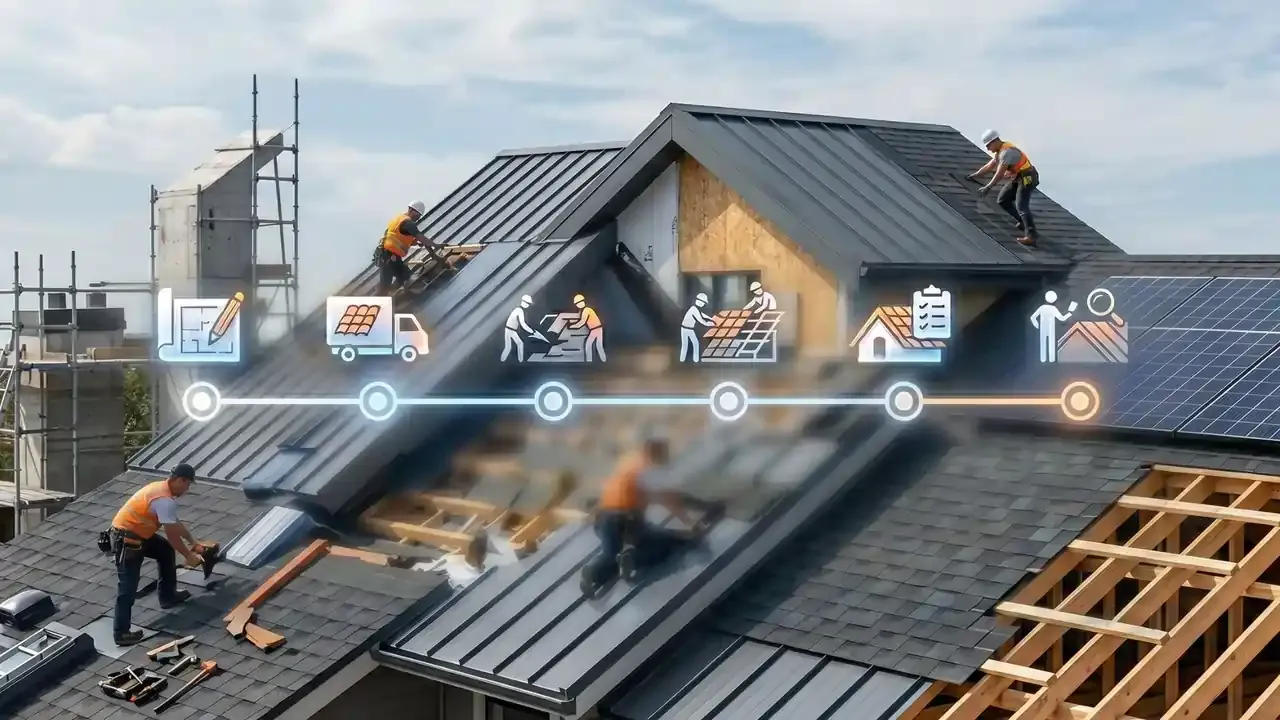
An accurate roofing project timeline wins bids, protects margins, and keeps customers happy. Most residential roof replacement projects run 1 to 3 days on the roof, but the full project timeline spans 2 to 4 weeks.
This guide shows roofing contractors how to estimate timelines based on several factors that impact every job. You will learn how to scope, schedule, and communicate timelines that hold up in the field. The explanation will go something like this:
- Why accurate roofing project timelines protect your bids, margins, and referral pipeline
- The five phases of a roof replacement project and the time each one consumes
- Typical roof replacement timeline ranges by project size and roof complexity
- The factors that impact the timeline, including weather, permits, and discovered damage
- Procurement lead times and install pace for every common roofing material
- A scoping framework for the free estimate that prevents broken bids on day one
- Crew sizing, scheduling, and customer communication tactics that keep jobs on track
- Cleanup and final inspection steps that close out the project and drive referrals
Why Accurate Roofing Project Timelines Matter
An accurate roofing project timeline is one of the strongest sales tools a roofing contractor has. Homeowners compare bids on price, warranty, and the timeline you commit to in writing.
Underestimating timelines damages your reputation and triggers callbacks. Overestimating costs you the bid to the roofing company down the street. The right balance protects margins and earns referrals.
- Realistic timelines reduce schedule slip and protect crew utilization across the season
- Clear timelines in your free estimate set expectations and prevent scope disputes later
- Accurate scheduling improves cash flow by aligning material orders with install dates
- On time delivery drives 5 star reviews, the top lead source for most roofing companies
- Confident project managers win more bids by giving customers a clear plan
- Tight timelines reduce overhead per job and free crews for the next install
The Five Phases of a Roof Replacement Project
Every roof replacement project follows the same five phases. Understanding the full scope of each phase lets you build a defensible timeline and price the job correctly.
The roofing process typically takes 2 to 4 weeks from first call to final inspection. Most of that time happens before crews ever step on the roof.
- Phase 1: Inspection and free estimate. Inspect the existing roof, take measurements, photograph damage, and deliver a detailed estimate within 1 to 3 days for asphalt shingle jobs.
- Phase 2: Material selection and contract. Walk the homeowner through roofing material options, sign the contract, collect deposit. This phase usually takes 1 to 5 days.
- Phase 3: Permits and material ordering. Pull permits, order roofing material, schedule crews and dumpster. This step takes 2 days to 6 weeks based on jurisdiction and material type.
- Phase 4: Tear off and installation. Remove the old roof, inspect the roof deck, install underlayment and flash details, lay the new roof. This is the active install window.
- Phase 5: Cleanup and final inspection. Clear debris, magnetic sweep, gutter cleanup, walk the homeowner through the work, and close out the permit.
The Typical Roof Replacement Timeline by Project Size
The typical timeline scales with roof size, complexity, and roofing material. Use the following ranges as your baseline when building estimates.
A 2026 report from Dr. Roof in Atlanta found that over 85% of standard residential projects finish within 4 days of onsite work. That benchmark assumes experienced crews and clear weather.
| Project Profile | Onsite Install Time | Full Project Timeline |
|---|---|---|
| Small residential roof (under 1,200 sq ft) | 1 day | 2 to 3 weeks |
| Medium residential roof (1,200 to 2,500 sq ft) | 1 to 3 days | 2 to 4 weeks |
| Large or complex residential roof (2,500 sq ft or more) | 3 to 5 days | 3 to 5 weeks |
| Steep pitch with valleys, dormers, skylights | 4 to 7 days | 4 to 6 weeks |
| Small commercial roof | 5 to 10 days | 3 to 6 weeks |
| Large commercial roof | 2 to 4 weeks | 6 to 12 weeks |
- Add 1 to 2 days for every 1,000 sq ft above the medium baseline
- Add 1 day for steep pitch (8/12 or higher) due to safety setup and slower install pace
- Add 1 to 3 days when discovered decking damage requires partial replacement
- Add 1 to 2 weeks for specialty material orders that ship from out of region
Factors That Impact the Timeline
The biggest variables are roof complexity, material selection, crew availability, and weather conditions. Hidden structural issues can shift a clean schedule by 1 to 3 days once tear off begins.
- Roof size and pitch: A larger or steeper roof requires more labor hours and additional safety setup.
- Roof complexity: Multiple valleys, dormers, chimneys, and skylights slow flashing and detail work.
- Roof deck condition: Rotten or damaged decking must be replaced before the new underlayment goes down.
- Existing layers: Two or three shingle layers double or triple tear off time on the same square footage.
- Crew size and skill: A 5 to 6 person experienced team finishes faster than a smaller or newer crew.
- Material selection: Asphalt shingle installs faster than metal roofing, tile, or slate.
- Weather conditions: Rain, wind, and extreme heat halt work for safety and product performance.
- Permit processing: Local building department backlogs can add 1 to 6 weeks before work starts.
Several factors impact the timeline of every roofing project. Build each one into your scope review before you quote a finish date.
Roofing Material Selection and Lead Times
Material selection drives both install time and procurement lead time. Build both numbers into the project timeline you give the homeowner.
Asphalt shingle is in stock at most distributors and ships in 1 to 7 days. Specialty roofing material like premium metal panels or tile blends can take 4 weeks or more.
| Roofing Material | Procurement Lead Time | Install Time (Average Home) |
|---|---|---|
| Asphalt shingle | 1 to 7 days | 1 to 3 days |
| Architectural shingle | 3 to 10 days | 2 to 3 days |
| Standing seam metal | 2 to 4 weeks | 3 to 7 days |
| Cedar shake | 2 to 3 weeks | 4 to 6 days |
| Clay or concrete tile | 3 to 6 weeks | 6 to 10 days |
| Slate | 4 to 8 weeks | 7 to 14 days |
- Quote specialty material lead times in writing on the free estimate to protect your delivery date
- Confirm in stock colors with your supplier before promising the homeowner a hard start date
- Order long lead time materials the same day the contract is signed to compress overall timeline
- Build a 25% to 35% margin into your asphalt shingle install pace to absorb unknowns
Permits, Weather, and Buffer Planning
Permits and weather conditions cause most schedule slip on roofing projects. Both factors are largely outside the contractor's control. Roofing permit approval ranges from 1 to 10 business days in most US cities. High volume markets can stretch to 6 weeks.
While the process is relatively straighforward in Illinois, other states might have varying timelines. Louisiana now requires a permit and final inspection on every reroof under state laws Act 239 and Act 422, effective August 1, 2025.
- Build a 1 to 2 week weather buffer into every project timeline during spring and fall storm seasons
- Track permit turnaround by jurisdiction in your CRM to set expectations during the consultation
- Confirm HOA approval timing early because architectural review boards can add 2 to 12 weeks
- Pre stage materials 24 hours before install to avoid same day delivery delays
- Monitor 7 day forecasts before scheduling tear off, since exposed decking is your liability if rain hits
- Plan emergency tarp protocols so partially completed roofs stay watertight when storms move in
According to the National Roofing Contractors Association, weather and permits cause more than 60% of all residential schedule misses. Building these buffers into your bid protects your reputation and your margins.
Scoping Accurately During the Free Estimate
The free estimate is where every accurate roofing project timeline starts. A rushed inspection produces a bid that breaks down on day one of install.
Document the existing roof in detail. Capture pitch, layer count, decking condition, ventilation, and every penetration that needs flashing. Photograph everything for your file and the customer's contract.
- Walk the full roof, not just the front slope visible from the driveway
- Inspect the attic for moisture, mold, daylight, and inadequate ventilation
- Measure accurately with drone software, satellite measurements, or hand measurements
- Check for evidence of multiple shingle layers at the rake edge and eaves
- Note all skylights, chimneys, dormers, vents, and dead valleys for flashing scope
- Document existing structural issues that may extend the project timeline
- Provide the homeowner with a detailed estimate that lists timeline by phase
Use a good, better, best estimate format so customers see the timeline tradeoffs of each material. This frame helps them choose without feeling pressured.
Crew Sizing, Scheduling, and Sequencing
Crew size has a direct impact on the timeline of every roofing project. A 5 to 6 person experienced team can finish a 2,000 sq ft asphalt shingle roof in 1 to 2 days.
Sequencing jobs across the season prevents idle crews and missed deadlines. Use roofing project management software to track every job from estimate to closeout.
- Match crew size to roof complexity. Steep pitches and tile roofing need more skilled hands per square
- Use a Pre Start Confirmation 24 to 48 hours before install to lock in materials, dumpster, and access
- Run a Day 1 Kickoff with the crew lead and a customer expectation reset on noise, landscaping, and timeline
- Build a Mid Job Update checkpoint to flag decking, ventilation, or flashing surprises early
- Stack jobs geographically to reduce drive time between sites and protect crew install hours
- Reserve one floating crew for emergency roof repair work and weather makeup days
- Use roofing estimating softwares like like AccuLynx or RoofSnap to connect estimates, contracts, scheduling, and payments
Customer Communication Throughout the Process
Customer communication is what separates the smooth project from the frustrated callback. Set expectations once, then confirm them at every checkpoint.
Roofing contractors who automate communication eliminate the most common schedule killer: confusion. Customers who know the plan stay calm when small surprises pop up.
- At the consultation: Provide a written timeline broken down by phase and any factors that may shift it
- After contract signing: Send a welcome email with the project manager's name, phone, and next steps
- Before install: Confirm start date 24 to 48 hours ahead with weather plan and access requirements
- During install: Send a Day 1 photo and a daily progress update so the homeowner stays informed
- On surprise damage: Document with photos, deliver a written change order, and pause for approval
- At closeout: Walk the property with the homeowner, deliver warranty paperwork, and request a review
The roofing experts at RoofSnap report that contractors who run these checkpoints cut schedule disputes by more than 50%. Clear communication is the cheapest insurance policy in the business.
Cleanup and Final Inspection
Cleanup and final inspection close out the roof replacement experience. This phase usually takes a few hours but may extend into a second day on larger projects.
Clean job sites drive referrals more than almost any other factor. Treat every closeout as a sales touchpoint that drives your next referral.
- Magnetic sweep the lawn, driveway, and adjacent properties to collect every nail
- Clear gutters and downspouts of shingle granules and tear off debris
- Remove the dumpster within 24 hours of install completion
- Walk the homeowner around the property for a punch list review and final inspection
- Request a municipal final inspection where required and close out the permit
- Hand off warranty documents, manufacturer registration, and a care guide
- Ask for a 5 star review while the homeowner is still standing in front of their new roof
Roofing Project Timeline FAQs for Contractors
How long is a typical timeline for a residential roofing project?
A typical timeline for a residential roofing project runs 2 to 4 weeks from first contact to final inspection. The actual install on the roof takes 1 to 3 days for an asphalt shingle job on a 1,500 to 2,500 sq ft home. Specialty roofing material can extend the full project timeline to 6 weeks or more.
How much buffer should contractors build into their roof replacement timeline?
Build a 1 to 2 week buffer into every roof replacement timeline during spring and fall. Add another week for projects in jurisdictions with permit backlogs. The National Roofing Contractors Association attributes more than 60% of schedule misses to weather and permits.
What install pace should I quote for an asphalt shingle roof?
Quote 1 to 3 days for an asphalt shingle roof on a 1,500 to 2,500 sq ft home with a 5 to 6 person crew. Add 1 day for steep pitch (8/12 or higher) or complex valleys. Add 1 to 3 days for discovered decking repairs.
How do I handle discovered damage during tear off without losing the timeline?
Document the discovered damage with photos and deliver a written change order before any extra work begins. Most roof deck repairs add 1 to 3 days depending on severity. Build this contingency language into your contract so customers expect it on the front end.
How long does the permit process add to a roofing project timeline?
Permits add 1 to 10 business days in most US cities and up to 6 weeks in busy markets. Track permit turnaround time by jurisdiction inside your project management software. Pull permits the same day the contract is signed to compress the overall timeline.
How do I set realistic timelines without losing the bid?
Use a good, better, best format with timeline tradeoffs for each option. Show the homeowner why an in stock asphalt shingle finishes 2 weeks faster than a custom metal roof. Realistic timelines win more bids than aggressive ones once customers compare three estimates side by side.
How does a commercial roof replacement timeline differ from residential?
A commercial roof replacement runs 1 to 4 weeks of install plus phased material delivery, safety planning, and tenant coordination. Small commercial buildings finish in 3 to 6 weeks total. Schools, apartments, and retail centers often require night or weekend work to limit business disruption.
What software helps roofing contractors manage project timelines?
Roofing platforms like AccuLynx, RoofSnap, and JobNimbus connect estimates, contracts, scheduling, and payments in one ecosystem. The right roofing project management software cuts callbacks, automates customer updates, and protects margin per job. Most platforms offer a free trial so you can test fit before committing.
Bottom Line on Roofing Project Timeline
Determining a roofing project timeline comes down to disciplined scoping, accurate material lead times, and honest customer communication. Most residential jobs run 1 to 3 days on the roof and 2 to 4 weeks end to end. Roof size, material selection, permits, and weather are the factors that impact the timeline most.
Tighten up your roof replacement process with the framework above and your bids will close at higher rates. Pair the workflow with quality project management software, and treat closeout as a referral opportunity. But before all of that, you need an actual roofing license.
Still don't have a license?
We help aspiring roofers become successful tradesmen.